Why your social circle feels smaller after 50
It is a common experience that many people find themselves reflecting on as they move through their 50s and beyond: the realization that their social world has become significantly more compact. For many years, your social life may have been dictated by external structures that required very little active planning. Perhaps it was the daily interaction with colleagues in a busy office, the "school gate" friendships formed while raising children, or the consistent routine of a long-term partnership that naturally brought you into contact with other couples. When these structures shift—whether through retirement, children moving away, relocation, or the end of a relationship—the incidental ways of meeting people often vanish.
This narrowing of your social circle is rarely a reflection of your personality or your ability to make friends. Instead, it is often a practical consequence of how life evolves in midlife. Professional roles may change, leading to less time spent in communal workspaces, or you may find that long-standing friends have moved away to be closer to their own families. Even changes in your personal energy or a shift in your daily habits can mean you are no longer putting yourself in the paths of strangers as often as you once did. It is important to remember that having a smaller circle is not a personal failure; it is simply a transition that requires a slightly more intentional approach to socialising than you might have needed in your 20s or 30s.
"In our younger years, socialising often happens to us. After 50, we often have to choose for it to happen."
Meeting new people at this stage of life requires a shift in mindset. While it can feel daunting to "start over" or to actively seek out new connections, it also offers a unique opportunity. For the first time in years, you may have the freedom to choose your social circle based entirely on your own genuine interests and values, rather than being limited to the people you happen to work with or the parents of your children's friends. However, this transition does require moving away from the hope that new people will simply "show up" in your life and moving toward a more proactive, though low-pressure, strategy.
- Workplace shifts: Moving to part-time work, consulting, or retirement can remove the "built-in" social life of an office.
- Family transitions: As children become independent, the shared activities that once linked you to other parents disappear.
- Divorce or bereavement: The loss of a partner often changes the dynamics of existing "couple-based" social groups.
- Relocation: Moving to a new area for a fresh start or to downsize means building a local network from scratch.
Practical steps to widen your world
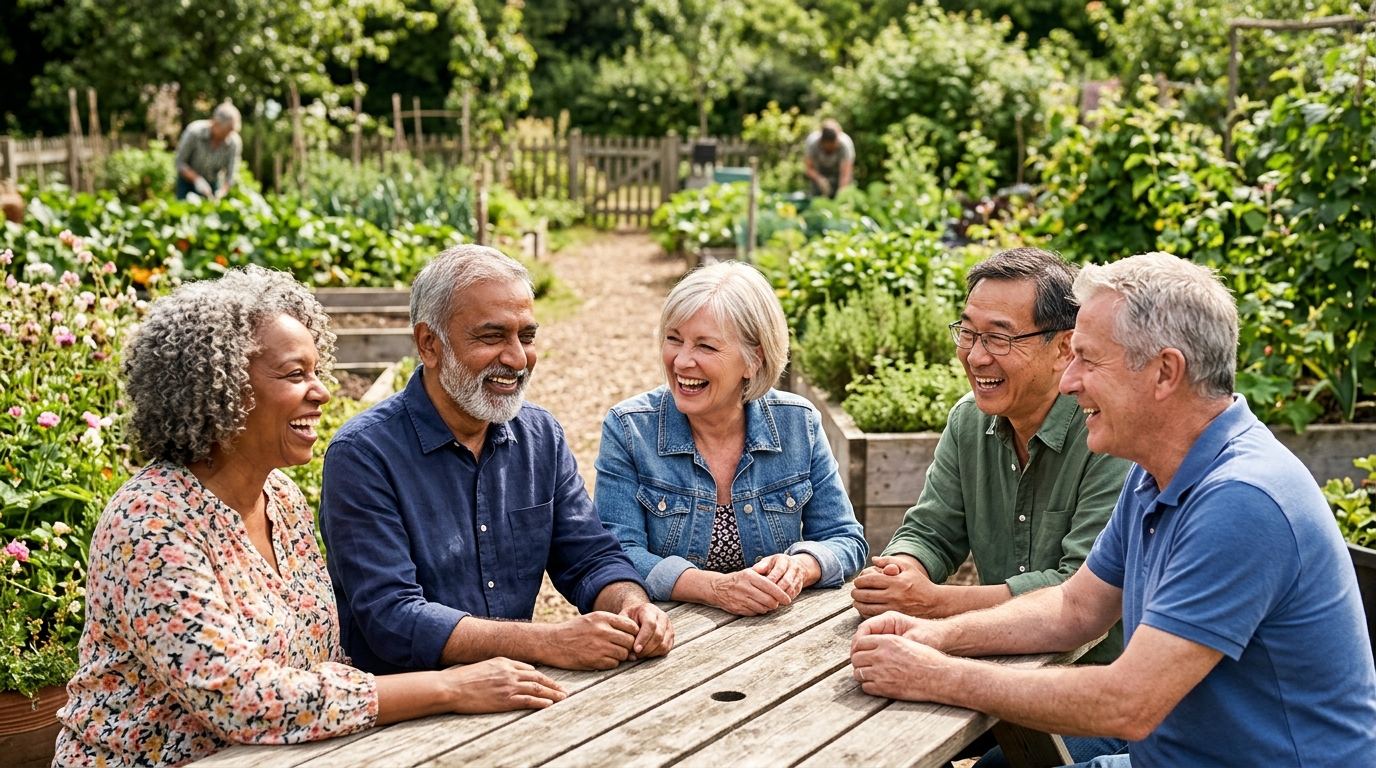
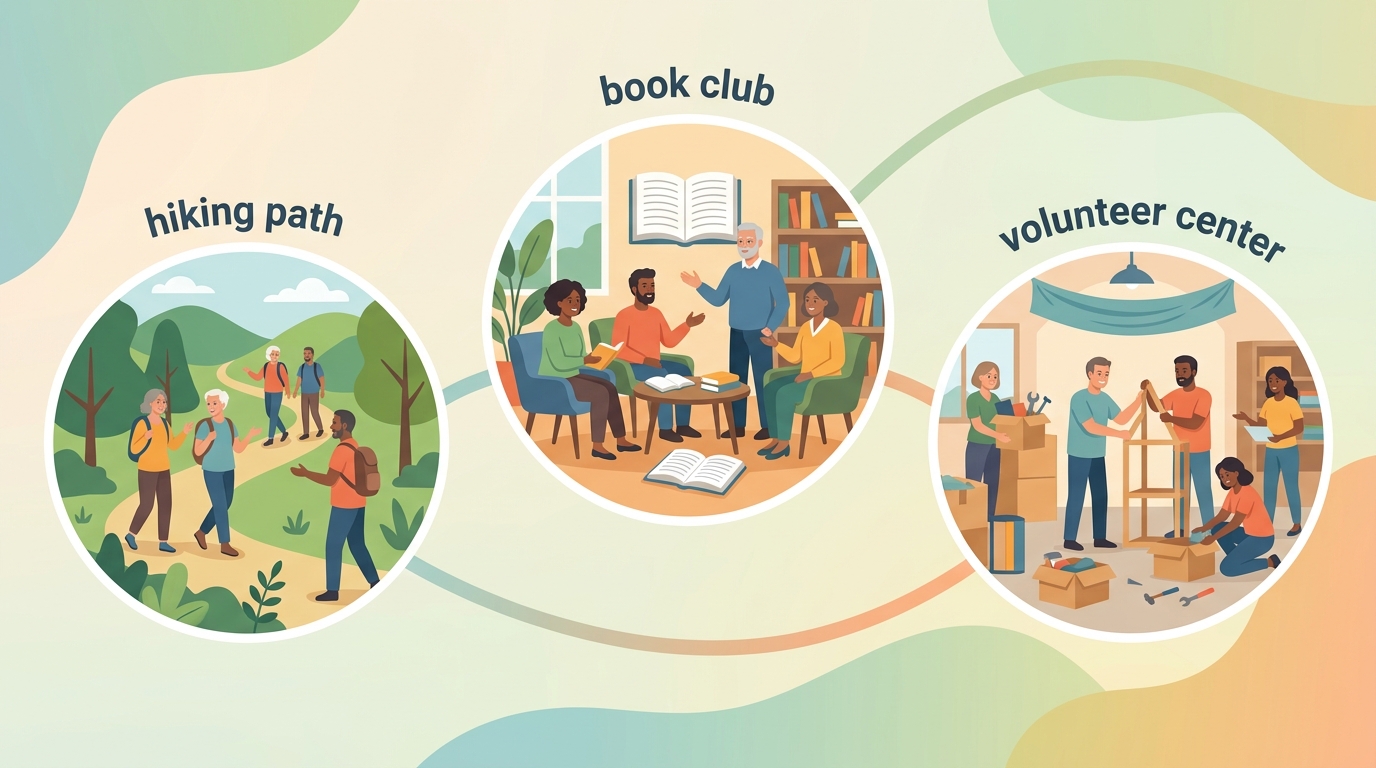
Expanding your social horizons does not mean you have to become an overnight extrovert or fill every evening with events. The most effective way to meet new people is often through "consistent proximity"—the simple act of showing up to the same place or activity regularly. When you attend a class or a group just once, everyone is a stranger. By the fourth or fifth time, faces become familiar, and the barrier to starting a conversation naturally lowers. This is why joining a regular walking group, a fitness class, or a local hobby circle can be so effective. Whether it is a local choir, a community allotment, or a book club, the focus remains on the activity, which takes the pressure off the social interaction itself.
Another powerful but overlooked method is reconnecting with your past. You likely have a wealth of "dormant ties"—people you used to be close to but have lost touch with over the years. This could be an old colleague you always got along with, a friend from university, or even a cousin you haven't spoken to in a while. Reaching out with a simple message to see how they are doing is often much easier than meeting a total stranger. Even if that specific person doesn't become a mainstay in your life again, they may introduce you to their own circle, widening your opportunities through mutual connections.
Online platforms can also play a supportive role, provided they are viewed as one tool among many. Online dating or friendship apps for the over-50s can be a great way to meet people you wouldn't otherwise cross paths with in your local area. However, it is often most successful when balanced with "offline" activities. You might use an app to find a date, but also volunteer at a local charity shop or attend a lecture at a nearby museum. This multi-pronged approach ensures that your social life feels varied and that you aren't putting all your emotional eggs in one basket.
A note on consistency: It is tempting to try a new group once and decide it "isn't for you" because you didn't meet someone immediately. Try to commit to at least three sessions before making a judgment. Familiarity is the foundation of most adult friendships.
Don't underestimate the power of everyday interactions. Being open to a brief chat with a neighbour, a fellow dog walker, or someone at the local café can lead to unexpected connections. You don't need a formal invitation to be friendly. Often, simply becoming a "regular" at a local spot—whether that’s the library, a coffee shop, or a park—makes you a recognisable part of the community. People are much more likely to strike up a conversation with someone they see frequently, as it feels safer and more natural.
- Volunteer: Local charities, food banks, or environmental groups are excellent places to meet like-minded, community-spirited people.
- Accept invitations: Even if you feel a little tired, try saying "yes" to that occasional drink or housewarming party you might usually decline.
- Ask for introductions: Don't be afraid to tell friends that you're looking to expand your circle; they may know of a local group or an individual you'd get along with.
Staying open and managing expectations
One of the most important aspects of meeting new people after 50 is learning to manage your own expectations. It is easy to fall into the trap of looking at every new interaction through the lens of "could this be my next partner?" or "is this my new best friend?". This level of pressure can make interactions feel forced and can lead to disappointment if a "spark" isn't immediate. Instead, aim to build a broader social foundation. Focus on finding interesting acquaintances and making friends first. A thriving social life is a reward in itself, and ironically, it is often when you are relaxed and enjoying yourself with friends that you are most likely to meet a romantic partner naturally.
Disappointment is a natural part of the process. Not every walking group will be a hit, and not every coffee date will lead to a second one. When an activity doesn't result in a new connection, try not to view it as a waste of time. If you enjoyed the activity itself—the walk, the painting, the learning—then the time was well spent regardless of the social outcome. Staying open means being willing to experience "neutral" social encounters without letting them discourage you from trying again next week. The goal is to create a life that feels full and interesting to you, which inherently makes you more attractive to others.
Ultimately, widening your social circle is about creating more "surface area" for luck to happen. By being present in different environments and maintaining a consistent routine, you increase the statistical likelihood of meeting someone you click with. You are not looking for a needle in a haystack; you are simply placing yourself in more haystacks. Whether these new connections turn into lifelong friendships, casual acquaintances, or a new romance, the act of staying engaged with the world around you is vital for your well-being. Keep the pressure low, keep your curiosity high, and allow your social life to grow at its own natural pace.
- Value friendship: A new friend can be just as life-enhancing as a new romantic partner.
- Be patient: Meaningful connections take time to develop; don't rush the process.
- Focus on the activity: If you enjoy the hobby, you'll have a good time even if you don't meet "the one" that day.
- Stay curious: Ask people about their lives and listen; genuine interest is the quickest way to build rapport.
Meeting new people in your 50s and beyond is not about reclaiming the social life you had in your 20s. It is about building a new, more intentional world that reflects who you are today. By staying consistent, being open to various types of connection, and choosing activities that genuinely interest you, you create a social environment where new relationships can flourish without being forced. A wider social life is a valuable asset in its own right, providing support, laughter, and new perspectives, while also laying the groundwork for romance to enter your life in the most natural way possible.